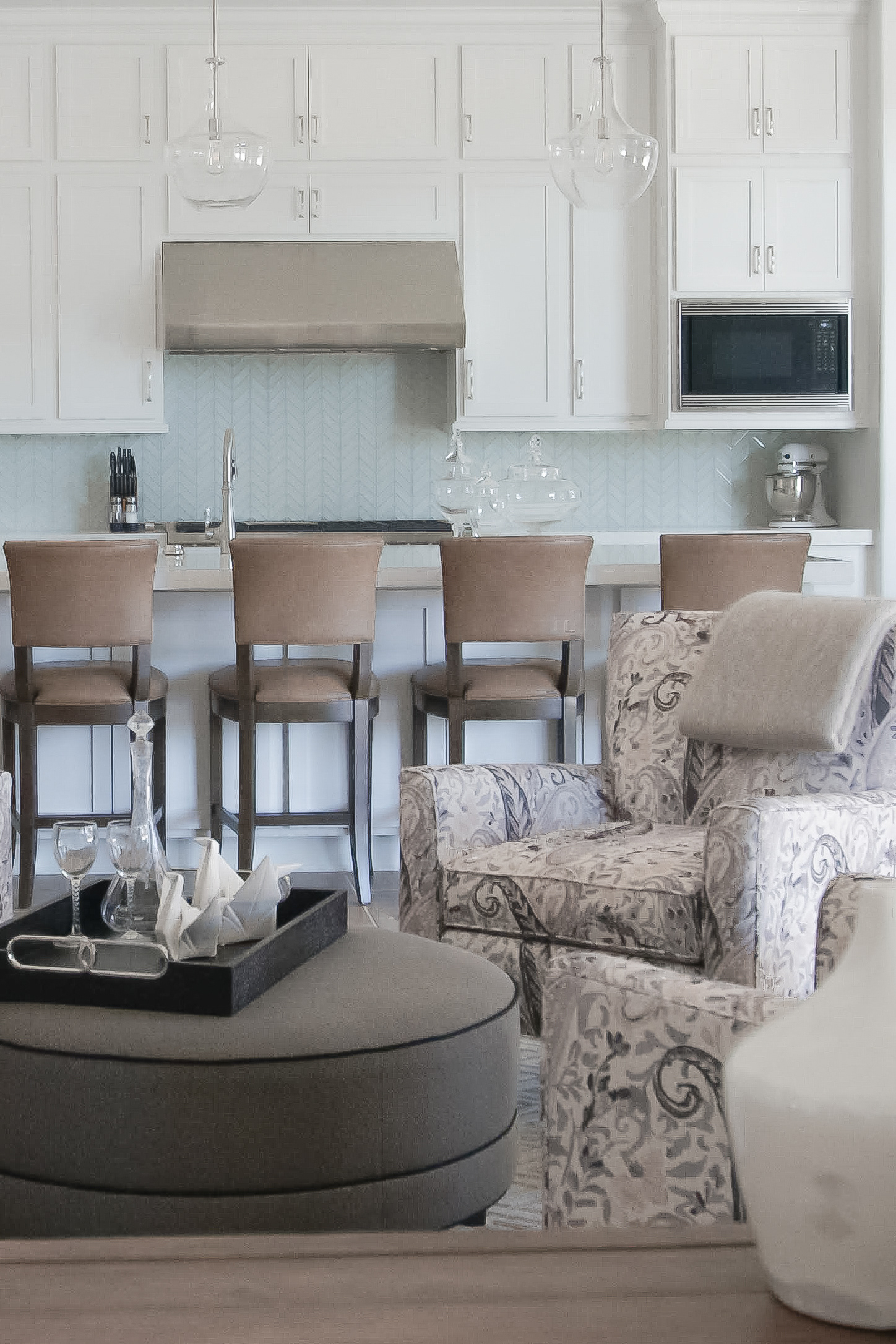
The contemporary "dining space" begins long before we reach the table. It starts in the social transition between the kitchen's functional counter seating and the relaxed comfort of a lounge. This visual flow demonstrates how today's design facilitates a continuous conversation, allowing the ritual of the meal to evolve from meal prep to a shared experience.
Looking back, we see that our contemporary residential open concept layouts have ancient roots. In Greece, dining environments were often casual and inviting, furnished with lounge seating and immersive, life-size art to prioritize conversation and communal connection. As we moved into the Italian Renaissance, the pendulum swung toward the formal, with grand aesthetics and ornate decorations defining a more rigid atmosphere. By the early American era, homes shifted again toward small, closed-off rooms, keeping each function of the house strictly separated. Today, we are seeing a beautiful return to that original sense of "classicism," where the invitation from room to room is felt through open layouts and shared energy.
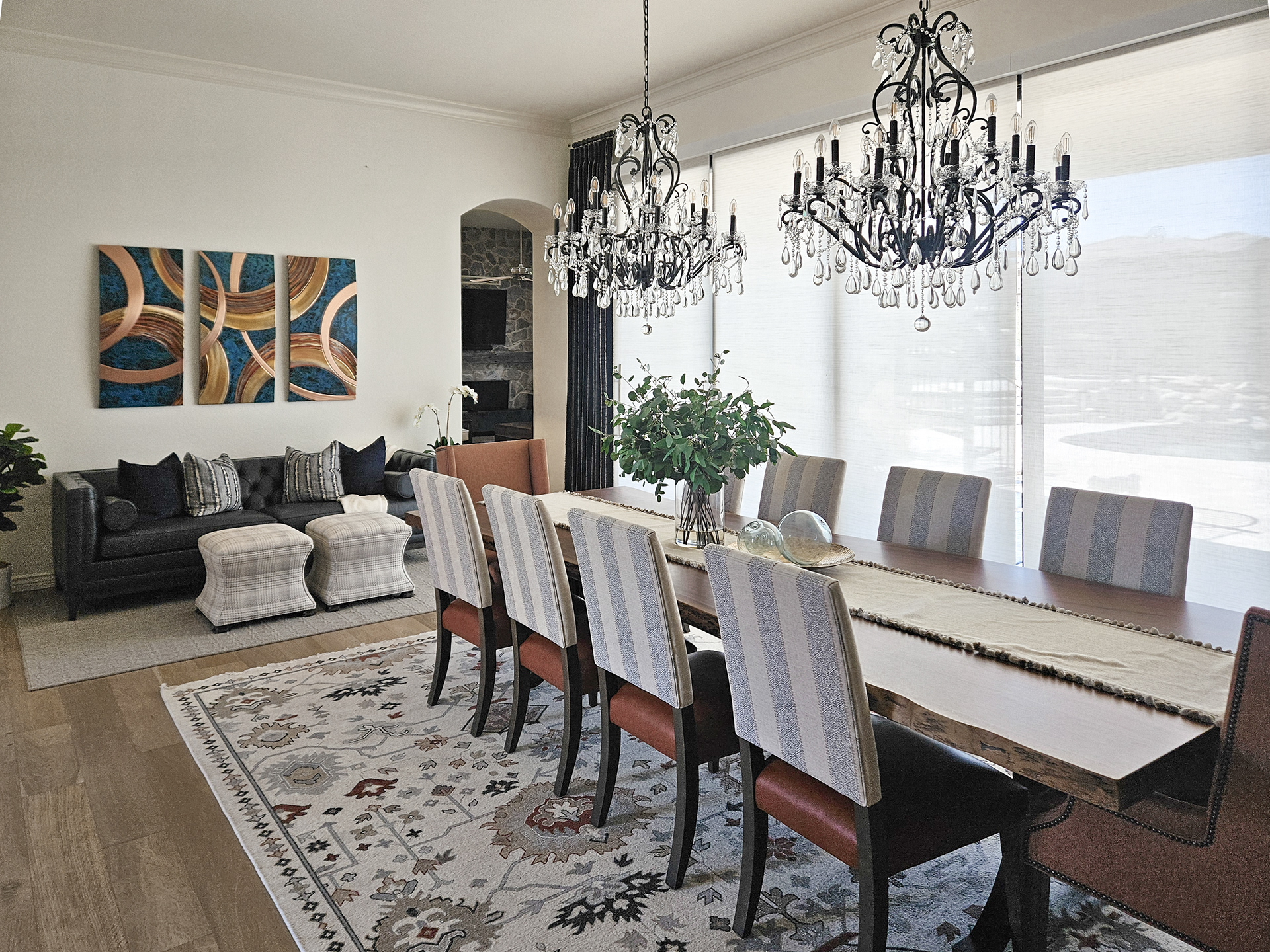
In my Ember Nomad project, the dining area functions as a versatile "shapeshifter," bridging the gap between high-design aesthetics and the practicalities of daily life. By utilizing "implied divisions" such as large-scale rugs and strategic furniture placement, we create a defined zone that remains anchored within the open-concept flow, effortlessly transitioning from a focused dining space to an evening sanctuary for guests.